For decades, ocean cruises have dominated the leisure travel landscape, offering travellers the promise of vast seas, luxurious ships and multiple destinations in a single journey. Today, however, a quieter yet equally compelling trend is making waves across the global tourism industry—river cruising. From the historic waterways of Europe and the mighty Mississippi in the United States to the sacred Ganges and the majestic Brahmaputra in India, river cruises are emerging as one of the fastest-growing segments of experiential travel. Combining luxury, culture, slow travel and sustainability, these voyages offer a unique way to discover destinations from an entirely different perspective.
Unlike ocean cruises that focus on large-scale entertainment and sea days, river cruises emphasise immersive destination experiences. Smaller vessels navigate inland waterways, allowing guests to dock in the heart of cities, towns and remote villages that are often inaccessible to larger ships. Modern travellers increasingly seek authentic experiences rather than conventional sightseeing. River cruises answer this demand by offering intimate encounters with local culture, cuisine, heritage and landscapes.

The global river cruise market has witnessed significant growth over the past decade, driven by affluent travellers, retirees, multigenerational families and younger explorers looking for meaningful journeys. Luxury operators have transformed river cruising into a premium travel experience, complete with gourmet dining, wellness facilities, personalised excursions and elegant accommodations.
Europe remains the undisputed leader in river cruising, with iconic rivers such as the Danube, Rhine, Seine, Douro and Rhône attracting millions of travellers annually. The Danube flows through ten countries and offers an extraordinary journey through cities such as Budapest, Vienna and Bratislava. The Rhine showcases fairytale castles, vineyard-covered hills and medieval towns across Germany, Switzerland, France and the Netherlands.
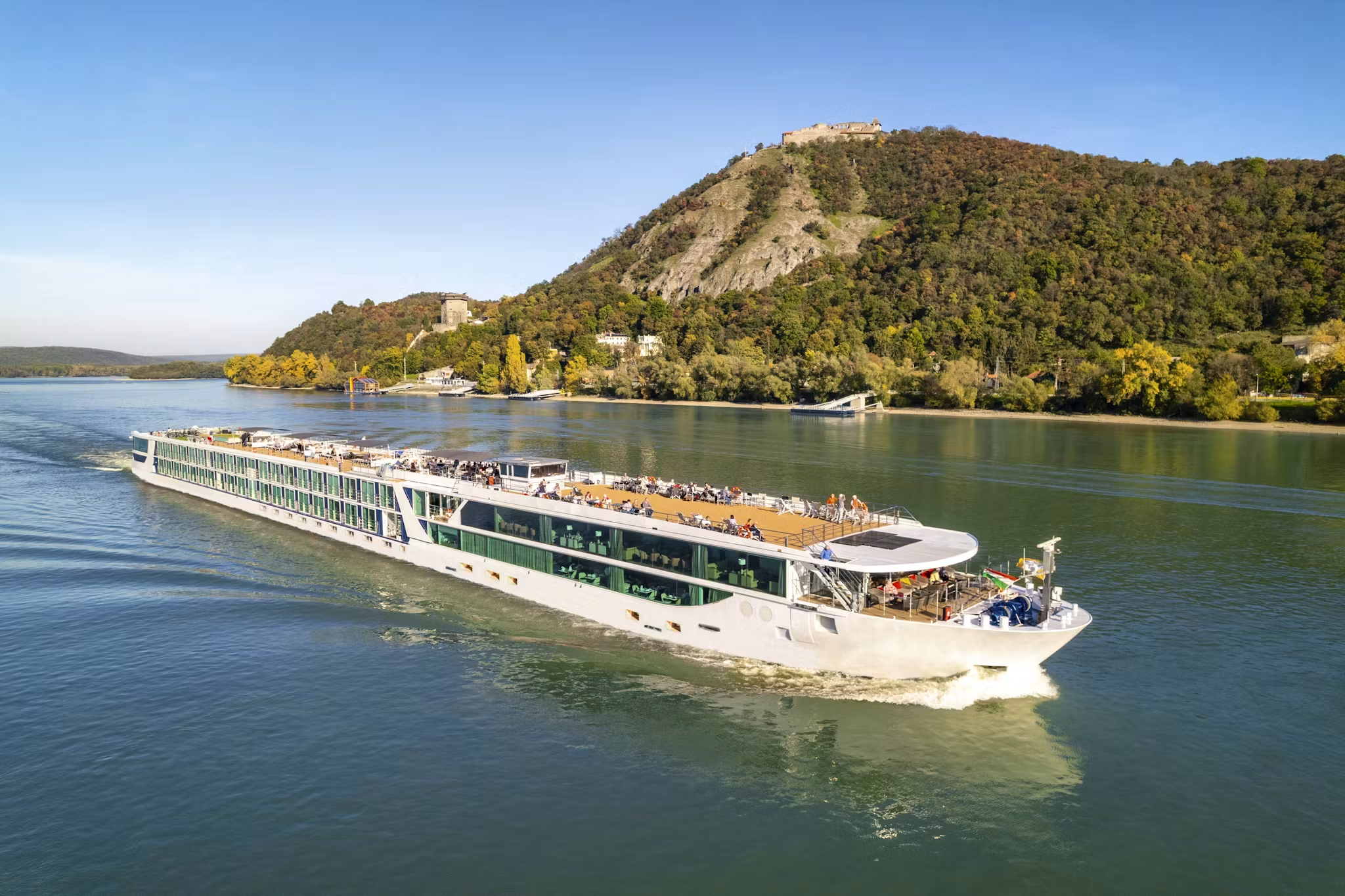
Meanwhile, France’s Seine introduces travellers to Paris and the picturesque landscapes of Normandy, while Portugal’s Douro Valley combines wine tourism with stunning scenery. European river cruises are particularly popular because they blend history, architecture, gastronomy and cultural immersion in a seamless travel experience.
River cruising is also flourishing beyond Europe. In the United States, journeys along the Mississippi River provide a nostalgic exploration of America’s cultural and musical heritage. Travellers experience historic river towns, Civil War landmarks and vibrant cities such as New Orleans and Memphis. South America offers cruises along the Amazon River, where guests encounter extraordinary biodiversity, indigenous communities and untouched rainforest ecosystems.
In Africa, the Nile remains one of the world’s most iconic river cruises, connecting travellers with ancient Egyptian civilisation through visits to temples, tombs and archaeological wonders. Asia is also emerging as a major river cruise destination. The Mekong River, flowing through Vietnam and Cambodia, has become a favourite among international travellers seeking cultural immersion, floating markets and authentic village experiences.
India is witnessing a remarkable transformation in its inland waterway tourism sector, positioning river cruising as one of the country’s most promising tourism segments. The government’s focus on developing national waterways and promoting cruise tourism has created new opportunities for both domestic and international travellers. Today, India offers a diverse range of river cruise experiences along some of its most historically and culturally significant waterways.

The Brahmaputra River in Assam is widely regarded as India’s premier luxury river cruise destination. Cruises along this mighty river provide access to breathtaking landscapes, tea estates, traditional Assamese villages and wildlife hotspots such as Kaziranga National Park. Guests can spot one-horned rhinoceroses, experience tribal cultures and explore centuries-old monasteries while enjoying luxury accommodations onboard. The Brahmaputra offers a rare combination of adventure, nature and cultural discovery that few destinations can match.
The Ganges River presents a journey through the spiritual and historical heart of India. River cruises connect destinations such as Kolkata, Varanasi and Patna, allowing travellers to witness ancient traditions, colonial architecture, vibrant markets and sacred rituals along the riverbanks. These cruises often include visits to heritage sites, temples, artisan villages and lesser-known cultural landmarks that showcase India’s rich civilisational heritage.

Although technically different from traditional river cruising, Kerala’s interconnected network of backwaters remains one of India’s most successful inland cruise products. Houseboats and boutique cruise vessels navigate serene waterways lined with coconut groves, paddy fields and traditional villages. The experience offers a blend of relaxation, local cuisine and cultural immersion that continues to attract travellers from around the world.
As travellers increasingly prioritise meaningful experiences over conventional holidays, river cruising is poised for continued growth. In India, investments in inland waterways, cruise terminals and tourism infrastructure are expected to unlock new routes across the Brahmaputra, Ganges, Yamuna, Godavari and other navigable rivers.

The evolution of luxury river cruising reflects a broader shift in traveller preferences over the past two decades. Affluent audiences increasingly valued cultural discovery, authenticity, and personalised experiences over scale and onboard spectacle, with a greater time spent in destination discovery rather than logistics and onboard entertainment. While they appreciated the no check-in, no check-out comfort of having a cruise holiday, bigger was not always better for them. Another big shift came during the pandemic when river cruising demonstrated several advantages during the industry’s recovery due to smaller passenger capacities, fewer crowds, open-air sightseeing opportunities, and regional and domestic travel appeal.
Avalon was also the very first brand to introduce and champion the concept of luxury river cruising in the Indian travel market, working closely with the Indian travel trade to build awareness and establish a new travel style category for discerning travellers. Through consistent market development and education, Avalon helped transform river cruising from a niche offering into a recognised premium travel experience. Avalon continues to lead through a philosophy of smaller ships, fewer guests, and greater personalisation, said Varesh Chopra, Managing Director – South Asia & Middle East, Avalon Waterways.

The shift toward river cruising really shows how today’s older travellers are changing their minds about what a perfect holiday looks like. Instead, they want a relaxing yet immersive experience. River cruising is perfect for this because it’s basically a floating boutique hotel—you pack and unpack just once, and there’s zero stress about catching buses or trains between cities. River cruises also glide right into the middle of historic towns. Guests can literally step off the boat and be sitting in a local café or a beautiful town square within minutes. It gives them their independence back and makes exploring feel easy, without the long walks, big crowds, or endless queues you get on giant ships. On the other hand, big ocean liners usually have to dock at massive commercial ports miles away from the heart of town.
Plus, the slower pace is all about quality over quantity. Instead of rushing, guests can sit back on deck and watch vineyards, castles, and quiet little villages drift by. Since these ships are small, usually with fewer than 200 people, the vibe is really warm and friendly. “It’s easy to strike up a conversation and make new friends during the daily tours, stated Kiran Bhandari, Director, Polarverse.

Unlike ocean cruising, where the ship is often the primary attraction, river cruising places the destination at the heart of the journey. Guests sail through the cultural and historical heart of a region, docking in city centres and charming towns that are often inaccessible to larger vessels. This allows travellers to enjoy a deeper connection with local cultures, cuisine, history, and traditions while unpacking only once. We are also seeing a shift in the demographic profile of river cruise guests. While mature travellers remain in a strong market segment, there is growing interest from younger retirees, affluent professionals, multi-generational families, and even first-time cruisers looking for a more intimate and curated travel experience.
An emerging opportunity within the river cruise sector is the growing interest in full-ship charters and group departures. River cruise vessels, with their smaller size and intimate atmosphere, are ideally suited for corporate incentives, special-interest groups, celebrations, and affinity travel. Charters allow organisations and travel partners to create highly customised experiences while enjoying the exclusivity of a private floating boutique hotel, making them an increasingly attractive proposition for the travel trade. In India, river cruising is still an emerging segment, but awareness is growing rapidly. As travellers become more experienced and seek authentic, immersive journeys, we expect river cruising to continue gaining momentum as one of the most compelling ways to explore Europe and beyond, added Dipti Adhia, Country Director, India, Discover the World.
Globally, cruise operators are introducing more sustainable vessels, immersive itineraries and specialised experiences focused on wellness, gastronomy, wildlife and culture. For modern travellers seeking a blend of luxury, authenticity and discovery, river cruises offer something increasingly rare in today’s fast-paced world – the opportunity to slow down, connect with a destination and experience the journey as deeply as the destination itself.
As the saying goes, sometimes the best way to understand a place is simply to go with the flow.