In 2026, the role of women in India’s travel and hospitality industry is undergoing a quiet but powerful transformation. What was once an industry where women were largely visible in operational roles—front office, guest relations, or housekeeping—is now evolving into a space where women are increasingly shaping leadership, innovation, and the overall direction of the sector. As travel rebounds strongly and the industry adapts to changing traveller expectations, women are emerging not just as participants, but as architects of its future.
For decades, hospitality has offered one of the most accessible career paths for women in India. The sector’s emphasis on communication, service, and people management naturally attracted a large female workforce. However, while women formed a significant part of the employee base, their presence at the leadership table remained limited. In recent years, this pattern has begun to change. In 2026, more women are stepping into positions such as hotel general managers, corporate leaders in hotel chains, tourism entrepreneurs, aviation professionals, and heads of travel companies. These roles signal an important shift in mindset within the industry; one that recognises leadership not by gender but by capability, empathy, and strategic thinking.

Hospitality organisations are increasingly aware that diversity at the leadership level leads to stronger decision-making and more inclusive guest experiences. As a result, many companies are consciously investing in mentorship programs, leadership training, and internal mobility initiatives that encourage women to move into senior positions.
Women leaders in hospitality often bring a unique perspective to the way businesses operate. The industry itself is deeply human-centric—built around understanding people, anticipating needs, and creating meaningful experiences. In this context, qualities such as emotional intelligence, collaborative leadership, and attention to detail often become powerful strengths. Across hotels, airlines, travel companies, and destination management firms, women leaders are influencing how brands engage with guests, build workplace culture, and design services. Many are championing employee well-being, flexible work models, and more inclusive organisational policies; changes that benefit the entire workforce. In a post-pandemic world where travellers seek authenticity and emotional connection, these leadership qualities are becoming increasingly valuable.
One of the most exciting developments shaping the future of women in the industry is the surge in women-led travel businesses. Across India, women are launching boutique travel companies, experiential tourism brands, wellness retreats, sustainable homestays, and niche tour operations. These entrepreneurs are not merely replicating traditional tourism models. Instead, they are redefining travel experiences by focusing on community engagement, cultural storytelling, sustainability, and immersive journeys.

Women-led travel ventures often highlight local traditions, regional cuisines, craft communities, and nature-based experiences. In doing so, they create tourism models that are not only economically viable but also socially responsible. This entrepreneurial wave is particularly visible in areas such as experiential travel, rural tourism, and curated small-group journeys; segments that are growing rapidly in India’s travel landscape.
Another factor shaping the future is the growing influence of women travellers themselves. Indian women are travelling more independently than ever before—whether for work, leisure, wellness, or exploration. Solo women travel, once considered niche, has become a significant trend. Women are taking weekend trips, international holidays, adventure journeys, and even long-term digital nomad experiences. This shift is encouraging the industry to rethink infrastructure and services through a more gender-sensitive lens.
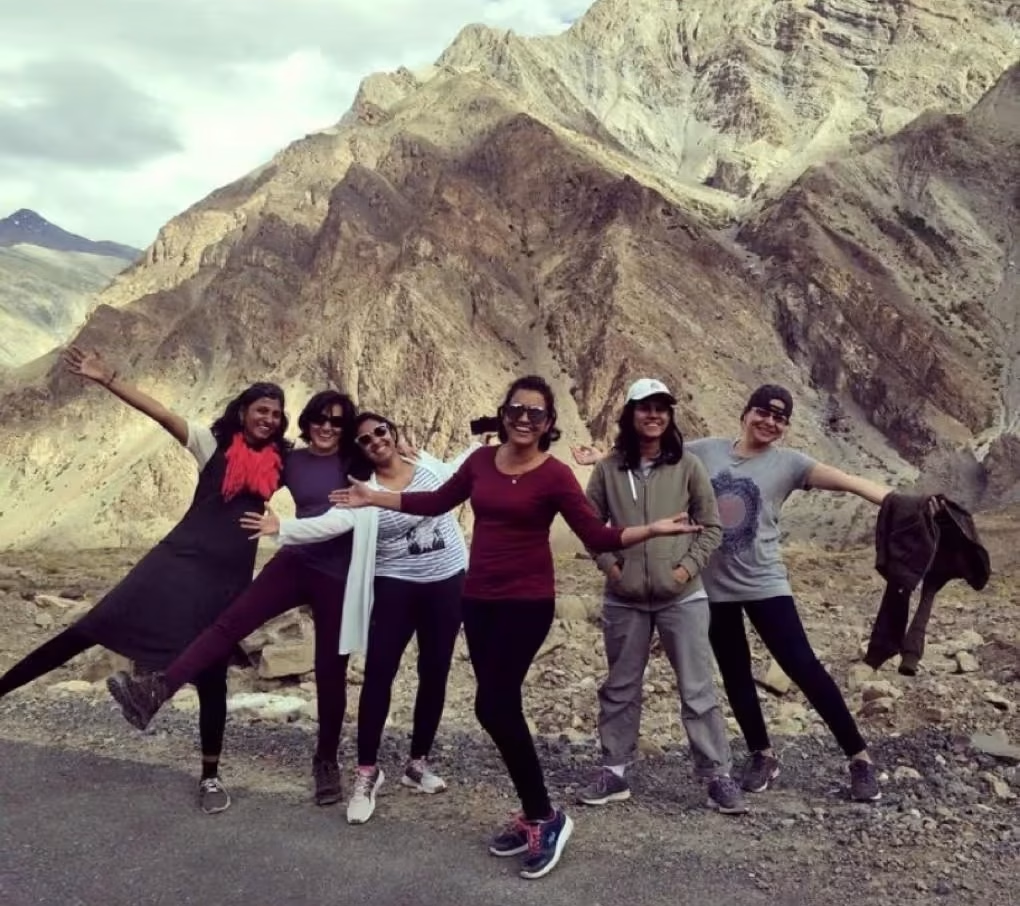
Hotels are introducing safer accommodation environments, improved lighting and security features, and staff training focused on guest safety. Travel companies are designing itineraries specifically tailored for women, while destinations are increasingly aware of the importance of being perceived as safe and welcoming. In this way, women travellers themselves are influencing the evolution of the industry.
Technology is also playing a key role in empowering women in travel and hospitality. Digital platforms, social media, and online travel marketplaces have lowered barriers to entry for entrepreneurs and professionals alike. Women travel influencers, bloggers, and digital storytellers are shaping how destinations are discovered and experienced. Their voices are particularly influential among younger travellers seeking authentic and relatable recommendations.

Similarly, remote work and digital connectivity have created new career possibilities within the sector. Women can now manage travel businesses, curate experiences, consult for tourism brands, or build travel-focused digital platforms from virtually anywhere. Technology is democratising opportunities in a way that was not possible even a decade ago.
Despite this progress, challenges remain. Hospitality is known for long working hours, demanding schedules, and the need for round-the-clock operations. For many women, balancing professional growth with personal responsibilities can still be a difficult journey. Forward-thinking hospitality companies are addressing these concerns through policies that support work-life balance, flexible scheduling, childcare support, and inclusive workplace cultures. Mentorship networks and professional associations are also playing an important role in helping women navigate career progression. The industry’s ability to retain and nurture female talent will depend largely on how well it continues to address these structural challenges.
Hospitality and tourism institutes across India are seeing strong female enrolment, signalling a promising future talent pipeline. Young women entering the industry today are more ambitious, globally aware, and technologically savvy than ever before. They are not only interested in operational roles but also in fields such as hospitality strategy, sustainable tourism development, destination marketing, aviation management, and travel technology. This new generation is likely to accelerate the pace of change in the coming years.
Looking ahead, the future of women in India’s travel and hospitality industry appears both dynamic and promising. As the sector continues to expand—driven by domestic tourism, experiential travel, and international interest in India—women will play an increasingly central role in shaping its direction. Their influence will be visible not just in hotel lobbies or airline cabins, but in boardrooms, tourism policies, innovative travel startups, and destination development strategies.

“As we celebrate International Women’s Day in 2026, the hospitality industry shows a significant change because women are taking on different roles throughout the entire field. Over the past decade, there has been steady progress, with more women stepping into operational, strategic and leadership positions. The hospitality industry depends on human interaction as its core component, and women contribute significant value through their abilities to understand others, adjust to different situations, and work together with others to lead. The industry provides women with various chances to work in multiple sectors, which include operations, guest service, culinary, event planning and management positions.
I believe that hospitality has the potential to become a standard for inclusive leadership practices in the future. The industry needs to build work environments that support women while creating multiple career opportunities and funding leadership programs to achieve the goal of developing women into future industry leaders. When organisations empower women to work in hospitality, this practice creates better business outcomes and enhanced customer service while driving the sustainable development of the entire industry,” says Sushma Khichar, General Manager, Sheraton Grand Bangalore Hotel at Brigade Gateway

“Travel in 2026 is no longer simply about destinations. It is about dignity, design, and deeply personal choice; and women are at the forefront of shaping this shift. Over the past decade, I have watched women travellers transform from being “accompanying guests” to becoming primary decision-makers. At Waxpol Hotels & Resorts, we see this every day across our wilderness properties. Women are arriving solo, with sisters, with friends, with children, and often as the planners of multi-generational journeys. Another visible shift is segmentation. Women’s travel now spans curated budget-friendly adventures, women-only expeditions, wellness retreats addressing hormonal and life-stage health, and conservation-led luxury.
One of the most beautiful evolutions is mother-and-child travel. I have seen mothers bring their children into the wild not as tourists, but as learners. A safari becomes a biology lesson. Women are consciously choosing destinations that are safe yet stimulating — where children can explore, and mothers can exhale. Safety remains fundamental — but in 2026, women are looking beyond physical security. They seek emotional comfort, cultural sensitivity, hygienic transparency, and ethical storytelling. They want to feel respected, not marketed to. Women’s travel is no longer a niche. It is a powerful economic and cultural force shaping itineraries, policies, and destinations. The future belongs to brands that listen deeply and act responsibly,” states Akanksha Garg, Founder–Director, Waxpol Hotels & Resorts.

“Looking back, it never felt like I was part of a “movement.” It was simply a personal choice. I did not want to wait for the perfect moment, the perfect group, or the perfect circumstances to start travelling. Safety, of course, has always been a priority. Even today, I am very mindful about where I stay. I prefer hotels that are centrally located, walkable, and secure. I do not necessarily seek extravagant luxury, but comfort, warmth, and a sense of ease matter. It is important for me to feel confident stepping out for dinner and returning without worry.
Over the past decade, I have noticed something remarkable — I am no longer an exception. More women are travelling, whether solo, with their children, or as part of small groups of friends who plan annual trips together. It is not dramatic or rebellious; it is simply practical and joyful. Women are coordinating schedules, booking tickets, and setting off to explore. In 2026, the biggest shift is confidence. Women are no longer asking if they can travel — they are asking, “Where to next?” adds Deepika Unni, Director, Exhibitions and Market Development, ITB Global Messe Berlin India Pvt Ltd.
Ultimately, the industry’s future will be defined by diversity and inclusivity. The more opportunities women have to lead, innovate, and participate fully in the sector, the richer and more resilient India’s travel and hospitality landscape will become. In many ways, the story of women in travel in 2026 is not just about equality—it is about possibility. And that possibility is steadily reshaping the industry for the better.